

Follow the Right Process to Fix Cracks and Damage That Lasts
Successful concrete driveway repair starts with a clean surface, the right tools, and a clear step-by-step plan. You need to find the cause of the damage, prepare the area, use the proper repair material, and allow enough time for curing. When each step is done the right way, your driveway looks better, lasts longer, and handles daily use without breaking down again.

What You Need Before Starting
Before you begin any driveway work, gather the right supplies. Having everything ready saves time and avoids rushed mistakes. Small cracks need different products than deep holes or large broken sections.
- Concrete cleaner or pressure washer
- Wire brush
- Concrete crack filler or patch mix
- Trowel or putty knife
- Concrete bonding adhesive (if needed)
- Protective gloves and eyewear
You should also check the weather. Dry, mild days are best. Very hot or freezing weather can weaken the repair before it sets.
Step-by-Step Process for Long-Lasting Results
Every strong repair follows the same basic order. Skipping steps often leads to cracks reopening or patches crumbling.
- Clean the area. Remove dirt, loose concrete, oil stains, and debris. A clean surface helps new material stick properly.
- Widen small cracks slightly. Use a chisel or screwdriver to open narrow cracks. This gives filler more space to bond.
- Apply bonding adhesive. For deeper damage, brushing on adhesive helps the new concrete grip the old surface.
- Fill the crack or hole. Use the right patch product. Press it firmly into place to remove air pockets.
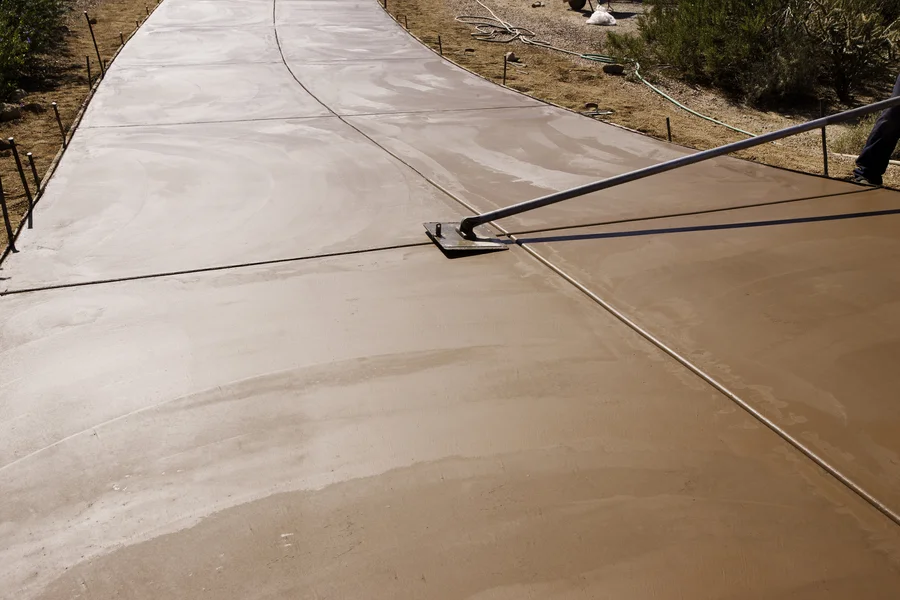
- Smooth and level the surface. Use a trowel to blend the repair with the existing driveway.
- Allow proper curing time. Keep traffic off the area for the recommended time listed on the product label.
Larger damage, like sunken slabs, may require lifting techniques or partial driveway replacement. At that point, basic patching will not solve the problem.
Common Mistakes to Avoid
Many homeowners rush the process. Quick fixes often fail within months. Avoid these common errors:
- Ignoring small cracks until they grow
- Skipping cleaning before applying patch material
- Using the wrong product for the size of damage
- Applying repair mix too thin
- Driving on the surface before it fully cures
Another mistake is fixing surface cracks without checking the base below. If soil has shifted or water is washing out support, the damage will return. A proper concrete driveway repair looks beyond the surface problem.
When to Call a Professional
Some repairs are safe for DIY work. Others require heavy tools and experience. If your driveway has long structural cracks, large potholes, uneven slabs, or drainage issues, professional help may be the smart choice.
A sinking section often means the ground beneath has settled. Fixing that may involve slab lifting or base reinforcement. Major surface flaking across the driveway can also signal poor installation from the start. In these cases, patching alone will not hold up.
If you are unsure, getting an expert opinion can prevent wasting time and money. Sometimes a small repair today prevents a full replacement later.
Final Recommendation and Next Steps
Concrete damage rarely fixes itself. Small cracks grow wider with water, heat, and daily traffic. Acting early keeps the repair simple and affordable. For homeowners in Hicksville, NY, changing weather can speed up driveway wear. We provide expert concrete driveway repair services at Contreras Masonry. Our team handles everything from minor cracks to major surface damage. Call (516) 212-3929 today to schedule an inspection and let us help protect your driveway for years to come.